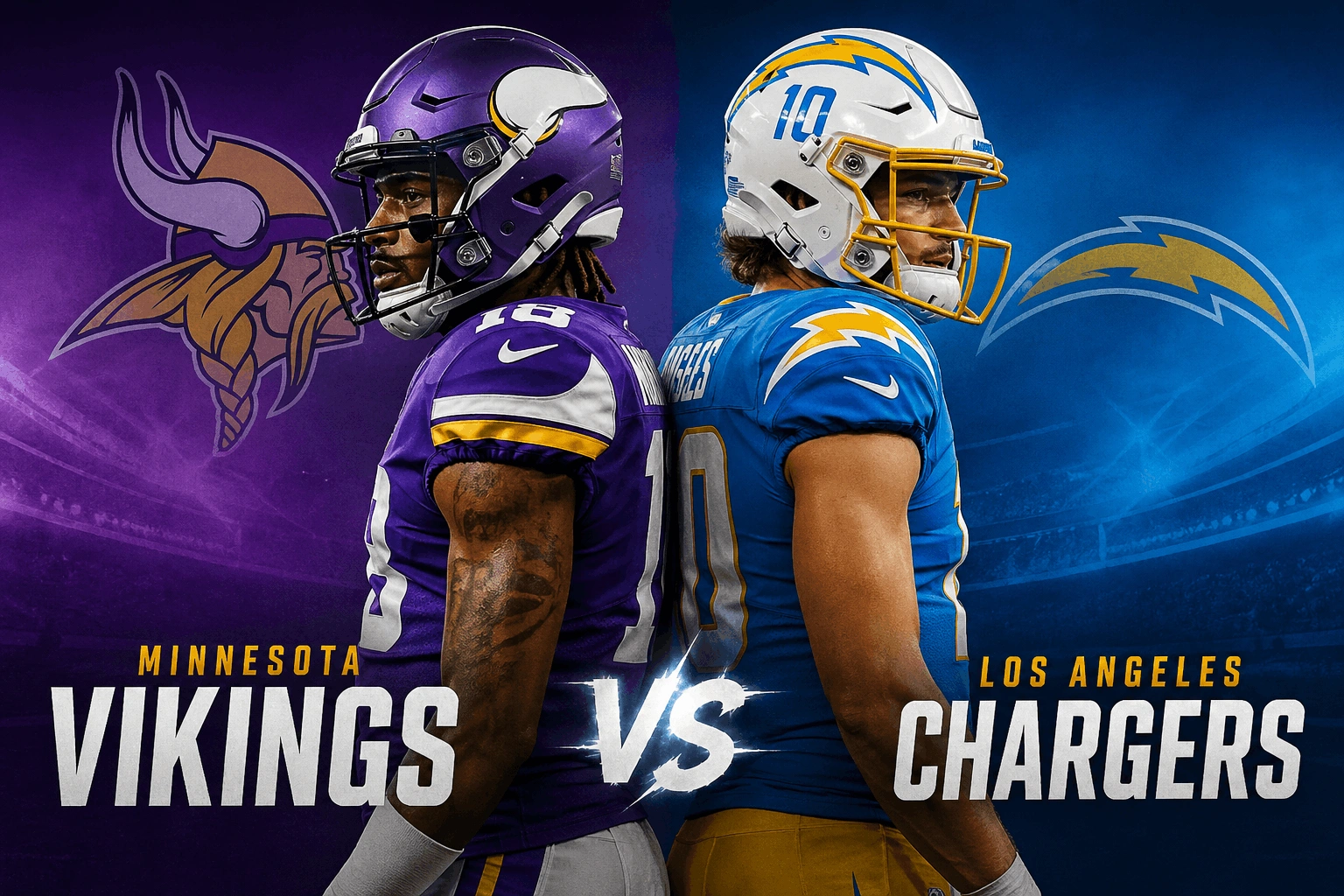
Minnesota Vikings vs Chargers Match Player Stats
Football fans rarely stop at the final score. They want to understand how individual players influenced momentum, controlled possession, created explosive plays, and changed the direction of the game. That is why searches for Minnesota Vikings vs Chargers Match Player Stats continue to grow among NFL followers, fantasy football managers, analysts, and sports readers.
This matchup attracts attention because both teams often feature productive offenses, recognizable playmakers, and competitive defensive schemes. Fans search for player performance data to understand quarterback efficiency, rushing success, receiving production, defensive pressure, and situational football.
A detailed statistical breakdown helps readers move beyond highlights and discover what truly shaped the outcome of the contest. Whether evaluating player form, comparing team strengths, or reviewing historical performance patterns, this guide provides a complete understanding of the matchup.
Why Player Statistics Matter in NFL Matchups
Player statistics tell the story behind every football game. While the scoreboard reveals the winner, stats explain how the game unfolded.
Football analytics have evolved beyond simple passing yards and rushing totals. Today, readers want insight into efficiency, consistency, decision-making, and game-changing moments.
When reviewing performance between Minnesota and Los Angeles, several statistical categories become especially important:
- Quarterback production
- Rushing effectiveness
- Receiver involvement
- Defensive pressure
- Turnover impact
- Third-down success
These categories create a complete picture of team execution.
Understanding Minnesota Vikings vs Chargers Match Player Stats
The phrase Minnesota Vikings vs Chargers Match Player Stats refers to individual player performances recorded during games between these teams.
These statistics usually include:
- Passing yards
- Touchdowns
- Completion percentage
- Rushing attempts
- Receiving yards
- Tackles
- Sacks
- Interceptions
- Time of possession contribution
Football fans study these metrics because they reveal patterns that are not always visible during live viewing.
For example, a quarterback may throw for fewer yards but still control the game through efficient decision-making and minimal mistakes.
Quarterback Performance Analysis
Quarterbacks remain the center of nearly every statistical discussion.
In games involving Minnesota and Los Angeles, passing efficiency often determines the pace of play.
Vikings Quarterback Style
Minnesota typically relies on structure, timing, and balance.
Quarterbacks within this system often succeed when they:
- Deliver quick reads
- Protect the football
- Use play-action passing
- Maintain strong completion percentages
The Vikings perform best when the quarterback limits turnovers and sustains drives.
Passing success often depends on protection from the offensive line and route precision from receivers.
Chargers Quarterback Approach
The Chargers frequently lean toward aggressive passing.
This style often includes:
- Deep throws
- Vertical routes
- High-volume passing attempts
- Quick offensive tempo
Chargers quarterbacks often generate strong statistical output because the offense creates opportunities for explosive plays.
When reviewing quarterback performance, analysts commonly examine:
- Completion rate
- Touchdown-to-interception ratio
- Yards per attempt
- Pocket movement
- Pressure response
These metrics reveal efficiency rather than volume alone.
Running Back Production and Game Flow
Rushing statistics are sometimes overlooked, but they play a major role in game outcomes.
A successful rushing attack affects:
- Clock management
- Offensive rhythm
- Defensive fatigue
- Red-zone scoring
Vikings Ground Game Identity
Minnesota often uses rushing to support passing efficiency.
A productive run game allows the offense to remain unpredictable.
Key indicators include:
- Yards per carry
- First-down conversions
- Red-zone effectiveness
- Explosive runs
When the Vikings establish consistency on the ground, offensive drives become more balanced.
Chargers Rushing Strategy
The Chargers often use running backs to complement passing aggression.
Rushing production becomes especially important during second-half possessions.
Strong rushing performance allows the Chargers to:
- Extend drives
- Protect leads
- Reduce pressure on quarterbacks
- Control tempo
Running back statistics reveal whether an offense achieved balance or relied too heavily on passing.
Wide Receiver and Tight End Contributions
Receiving production creates some of the most searched football statistics.
Fans want to know which players dominated targets, generated yards after the catch, and delivered key plays.
Vikings Receiving Trends
Minnesota frequently depends on route discipline and timing.
Receivers often succeed through:
- Reliable hands
- Separation ability
- Intermediate routes
- Red-zone efficiency
Target distribution becomes important because it reveals offensive strategy.
A receiver with fewer catches may still have a major impact through explosive gains.
Chargers Receiving Strengths
The Chargers often feature aggressive passing concepts.
Receivers may generate higher yardage totals due to:
- Deep passing schemes
- Vertical spacing
- Speed advantages
- High passing volume
Receiver statistics often include:
- Targets
- Catch percentage
- Receiving yards
- Touchdowns
- Average yards per catch
These categories explain how offensive production was distributed.
Defensive Stats That Shape Results
Defense plays a major role in every football matchup.
Strong defensive performances often determine field position, momentum, and scoring opportunities.
Key Defensive Metrics
Several defensive categories matter most:
- Sacks
- Tackles for loss
- Quarterback hits
- Forced turnovers
- Pass breakups
- Defensive stops
Pressure can completely alter offensive performance.
When defenders consistently disrupt passing rhythm, quarterbacks struggle to maintain efficiency.
Vikings Defensive Approach
Minnesota often focuses on creating pressure through aggressive schemes.
Defensive success may depend on:
- Blitz timing
- Coverage discipline
- Edge pressure
- Red-zone stops
A strong defensive effort can reduce explosive plays and shorten offensive drives.
Chargers Defensive Identity
The Chargers often rely on athletic defenders who create pressure from multiple positions.
Defensive impact becomes noticeable through:
- Pocket collapse
- Run containment
- Secondary coverage
- Turnover creation
Defensive numbers often reveal hidden advantages not visible in traditional scoring summaries.
Benefits of Studying Match Player Statistics
Analyzing statistics provides several advantages for football fans.
Better Understanding of Team Strategy
Player numbers explain coaching decisions and offensive identity.
Readers gain insight into:
- Play calling
- Risk management
- Situational execution
- Offensive balance
Fantasy Football Improvement
Fantasy players often rely on matchup trends.
Statistics help identify:
- Reliable performers
- Breakout candidates
- Volume opportunities
- Defensive weaknesses
Smarter Game Predictions
Historical performance creates valuable context.
Reviewing player trends helps estimate future outcomes more accurately.
Challenges When Interpreting Football Statistics
Numbers can sometimes create misleading conclusions.
Understanding context remains essential.
Total Yardage Can Be Misleading
A team may produce large yardage totals while trailing late in the game.
This creates inflated statistics without true dominance.
Game Script Changes Results
Teams playing from behind often pass more frequently.
This can increase quarterback and receiver totals artificially.
Defensive Strength Matters
Player production depends heavily on opponent quality.
Strong performances against weaker defenses should be evaluated carefully.
Advanced Metrics Used in Football Analysis
Modern football evaluation now includes deeper performance indicators.
Success Rate
Success rate measures how often an offense stays ahead of schedule.
This reflects consistency rather than occasional explosive plays.
Pressure Percentage
Pressure rate tracks how frequently quarterbacks face disruption.
High pressure usually leads to:
- Lower accuracy
- Faster decisions
- Increased mistakes
Red-Zone Efficiency
Teams that finish drives with touchdowns usually outperform opponents.
Red-zone statistics explain scoring consistency.
Third-Down Conversion Rate
Third-down performance shows offensive sustainability.
Teams converting third downs extend possessions and create scoring chances.
Real-World Example of Statistical Impact
In many Vikings and Chargers contests, the outcome often comes down to efficiency rather than total yardage.
A team may dominate through:
- Better quarterback decision-making
- Stronger defensive pressure
- Improved rushing balance
- Fewer turnovers
- Higher third-down conversion
This shows why player statistics provide deeper understanding than final scores alone.
Looking only at points scored does not reveal how momentum shifted throughout the game.
How to Analyze Minnesota Vikings vs Chargers Match Player Stats
Understanding football stats becomes easier when following a structured process.
Step 1: Evaluate Quarterback Efficiency
Start with quarterback performance.
Focus on:
- Completion percentage
- Touchdowns
- Interceptions
- Yards per attempt
Step 2: Review Rushing Production
Rushing balance often determines offensive control.
Check:
- Average yards per carry
- Goal-line success
- First-down conversions
Step 3: Examine Receiver Usage
Receiver involvement reveals offensive priorities.
Analyze:
- Target share
- Catch efficiency
- Big-play production
Step 4: Study Defensive Pressure
Pressure affects nearly every offensive stat.
Look at:
- Sacks
- Turnovers
- Quarterback hits
Step 5: Compare Situational Metrics
Important categories include:
- Red-zone scoring
- Third-down efficiency
- Time of possession
This method creates a full performance picture.
Common Trends Fans Look For
Search trends show that readers often want more than player totals.
Popular areas of interest include:
- Quarterback comparison
- Defensive impact
- Fantasy football implications
- Offensive efficiency
- Key turning points
- Matchup advantages
Readers also look for context explaining why certain players succeeded.
This deeper analysis creates stronger understanding.
Expert Insight on Player Analysis
Experienced football analysts rarely focus on one category alone.
Strong evaluation combines:
- Statistical review
- Film study
- Opponent strength
- Game situation
- Injury context
Football performance should always be viewed within the larger picture.
Numbers become meaningful when paired with explanation.
Frequently Asked Questions
What are Minnesota Vikings vs Chargers Match Player Stats?
These stats include player performances recorded during games between Minnesota and Los Angeles, such as passing yards, rushing production, tackles, and touchdowns.
Why do fans search for player statistics?
Fans want to understand individual impact, compare performances, and evaluate team strengths.
Which player stats matter most?
Quarterback efficiency, rushing success, defensive pressure, and receiving production often carry the greatest value.
Do advanced metrics improve analysis?
Yes. Advanced measurements provide deeper insight into efficiency and consistency.
Why are defensive stats important?
Defense influences field position, momentum, turnovers, and scoring opportunities.
How do stats help fantasy football players?
Statistics reveal player trends, volume opportunities, and matchup advantages.
Also read about Chargers vs Colts Match Player Stats
Final Thoughts
The interest surrounding Minnesota Vikings vs Chargers Match Player Stats continues to grow because football fans want deeper understanding.
Statistics provide context that highlights alone cannot deliver.
Quarterback efficiency, rushing consistency, receiver production, and defensive disruption all contribute to game outcomes.
Studying player performance allows readers to understand not just who won, but why the game unfolded the way it did.
For fans, analysts, and fantasy players, detailed football statistics remain one of the best ways to evaluate performance and predict future trends.